BLOG

Fraud and Misrepresentation in California Real Estate: When a Sale Can Be Undone

March 2, 2026 | By

Real estate fraud in California can void a property sale and entitle the injured party to rescission, financial damages, or both. California law protects buyers and sellers from fraud and misrepresentation in real estate transactions, but strict deadlines apply, and acting quickly is critical. 

According to the FBI’s 2023 Internet Crime Report, more than 9,500 real estate-related fraud complaints were filed nationwide. California consistently ranks among the top states for real estate fraud activity. From undisclosed structural defects to forged documents and identity-based schemes, property transactions remain a common target. 

If you discover after closing that something wasn’t disclosed, or that representations made during the deal were false, you are not alone. And you may have powerful legal remedies available. 

When Should You Contact a Los Angeles Real Estate

Continue reading →

Posted In: Blog, Real Estate Litigation

Opening Statements in California Civil Trials: Strategy and Execution

February 23, 2026 | By
Opening Statements in California Civil Trials

In a California civil trial, an effective opening statement does more than outline a case. It shapes the narrative the jurors will use to interpret everything they hear during the trial. 

Its purpose is to organize the case for the fact finder and establish credibility from the outset. 

1. Start With a Story Grounded in Real People and Real Events

Jurors connect with people, not legal theories.  

Your opening should in plain language answer three questions immediately: 

  • Who are the parties? 
  • What happened? 
  • Why does it matter? 

A persuasive opening explains what happened in clear, direct language, sets the factual and emotional context, and grounds the case in the real experiences of the people involved. 

Jurors and judges alike process cases as stories. In California civil litigation, where cases often

Continue reading →

Posted In: Blog, Trial Strategy

California’s 10-Year Builder Warranty: What Homeowners Need to Know About Construction Defects

January 27, 2026 | By
California's 10-Year Builder Warranty

Buying or building a home is one of the biggest investments most people ever make. When serious problems like structural cracking, water intrusion, or foundation movement appear years later, homeowners are often left wondering whether they still have any legal protection. In California, the answer may lie in what’s commonly called the 10-Year Builder Warranty, a powerful but often misunderstood legal protection for construction defects. 

California law provides a statutory 10-year period during which homeowners may pursue claims for certain serious construction defects. However, this protection comes with strict rules, firm deadlines, and no room for delay. Understanding how the law works can make the difference between preserving your rights and losing them permanently. 

What is California’s 10-Year Builder Warranty? 

California’s 10-year builder warranty comes from Code of Civil Procedure

Continue reading →

Posted In: Real Estate Litigation

Prescriptive Easements in California: What to Do When Long-Term Use of a Neighbor’s Land Creates Legal Rights

December 20, 2025 | By
Prescriptive Easements in California

When a neighbor has used part of your land for years, or you’ve relied on access across theirs, conflict often starts when a driveway is blocked, a pathway is closed, or a new owner suddenly changes access. In California, long-term, open use can create legally enforceable rights known as prescriptive easements. Understanding how a prescriptive easement in California is established helps property owners respond calmly, avoid escalation, and protect their property rights before a dispute turns into costly litigation.

Under California law, long-term, open, and adverse use of another person’s property can mature into a legally enforceable prescriptive easement, even without a written agreement.

What Is a Prescriptive Easement?

A prescriptive easement is a right to use another person’s land that arises under California common law when certain requirements

Continue reading →

Posted In: Blog, Easement and Encroachment Actions

Can’t Agree on Selling Your Property? How Co-Owners Can Force a Sale or Buy Out Their Partner in California

November 20, 2025 | By
How Co-Owners Can Force a Sale or Buy Out

Co-owning real property can be a great wealth building strategy until co-owners disagree about selling, refinancing, or keeping the property. When one owner wants to sell and the other refuses, California law offers a path to resolve these disputes through a partition action or a structured buyout.

In 2023, California enacted the Partition of Real Property Act (PRPA), a major reform that reshaped how some partition cases work. These changes dramatically affect litigation strategy, timelines, and outcomes for co-owners throughout the state.

This guide explains what the PRPA does, who it covers, how the buyout process works, and what steps you should take before filing or defending a partition action.

What Changed? Expanded Buyout Rights for Most Tenants-in-Common

Before 2023, California’s statutory buyout rights mainly protected heirs who inherited …

Continue reading →

Posted In: Blog, Partition Actions, Real Estate Litigation

Trial Skills Fundamentals: Cross-Examination and Impeachment in California

June 25, 2025 | By

Cross-examination is a critical component of trial practice. Done skillfully, it can dismantle a witness’s credibility, shape the jury’s understanding of your case, and set the stage for a successful verdict. Done poorly, it can alienate the jury and reinforce the opposing party’s narrative.

This article distills key takeaways from a recent legal training focused on cross-examination and impeachment, integrating strategic insights with relevant California law, including Evidence Code § 773 and portions of the Code of Civil Procedure §§ 90–100, which govern trial testimony and procedure in both unlimited and limited civil cases.

1. Strategic Foundation for Cross-Examination

The Purpose of Cross-Examination

Cross is not about scoring technical points for an appellate record or grabbing sound bites. It’s about storytelling. You are guiding the jury toward your theory …

Continue reading →

Posted In: Blog, Cross Examination

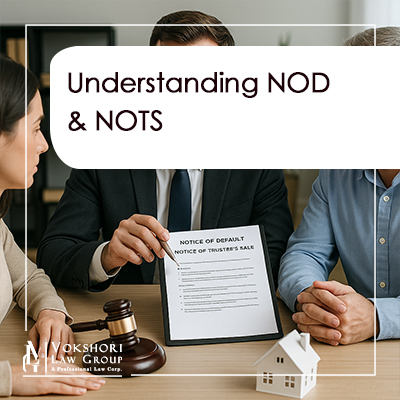
Understanding the Notice of Default (NOD) and Notice of Trustee’s Sale (NOTS)

June 12, 2025 | By

Recent statistics show that California foreclosure filings have increased by 41% in the past year. If your home is in foreclosure, you are far from alone.

Fortunately, California law provides important protections for homeowners to challenge wrongful foreclosures and potentially stop the process.

Below, we explain how the foreclosure process works in California—specifically the Notice of Default (NOD) and the Notice of Trustee’s Sale (NOTS)—and what you can do to protect your home.

Notice of Default (NOD)

The NOD is the first formal step in California’s non-judicial foreclosure process, governed by California Civil Code § 2924. When a borrower falls behind on their mortgage payments, the lender—or more commonly, the trustee—records the NOD at the county recorder’s office in the county where the property is located.

Key Requirements

Continue reading →

Posted In: Blog, Real Estate

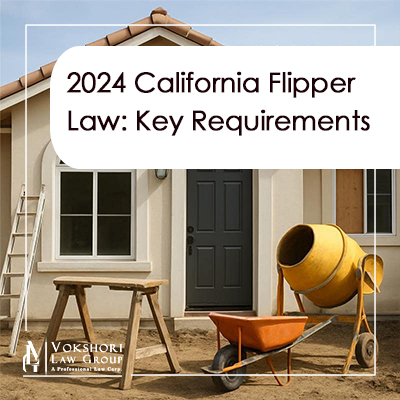
2024 California Flipper Law: Key Requirements for Sellers, Buyers, and Investors

June 9, 2025 | By

Home flipping has long been a popular real estate investment strategy in California, with average gross profits on flipped homes reaching $73,500 in 2024 (ATTOM Data Solutions). But as of July 1, 2024, a new California law—AB 968, codified as Civil Code § 1102.6h—significantly changes the disclosure obligations for certain sellers. Known as the California Flipper Law, it aims to increase transparency and protect homebuyers from hidden defects in recently renovated properties.

Here’s what real estate investors, sellers, and buyers need to know about this new law.

What Is the California Flipper Law?

Effective July 1, 2024, Civil Code § 1102.6h applies to sellers who:

  • Sell a residential property with one to four units
  • Accept an offer to purchase within 18 months of acquiring title

If these …

Continue reading →

Posted In: Blog, California Real Estate

California Documentary Transfer Tax Exemptions: How to Save Thousands When Transferring Property

March 27, 2025 | By

Selling or transferring real estate in California often comes with hidden costs. One of the most overlooked is the Documentary Transfer Tax (DTT) – a fee that can surprise even experienced property owners. However, many transfers qualify for exemptions that reduce or eliminate this tax entirely.

If you’re unfamiliar with how these exemptions work, you could end up paying thousands of dollars unnecessarily. The difference often comes down to legal knowledge and attention to detail. A qualified real estate attorney can help you take full advantage of every available exemption and avoid costly errors.

What Is the Documentary Transfer Tax?

The Documentary Transfer Tax is a one-time tax assessed on the transfer of real property in California. It is governed by California Revenue & Taxation Code §11911 and is typically …

Continue reading →

Posted In: Blog, Real Estate Transactions

Understanding FIRPTA: When Foreign Sellers Face Withholding Requirements

March 18, 2025 | By
hen Foreign Sellers Face Withholding Requirements

The Foreign Investment in Real Property Tax Act (FIRPTA) requires buyers of U.S. real property interests from foreign sellers to withhold a portion of the purchase price and remit it to the Internal Revenue Service (IRS). This ensures that foreign sellers pay any applicable taxes on gains from U.S. property sales.

What Is FIRPTA Withholding?

Under FIRPTA, buyers must withhold 15% of the purchase price when acquiring U.S. real property from a foreign seller. The withheld amount is credited toward the seller’s potential tax obligations when they file a U.S. tax return.

Who Is Considered a Foreign Person?

FIRPTA applies only when the seller is classified as a foreign person, which includes:

  • Nonresident aliens
  • Foreign corporations that have not elected to be treated as domestic corporations
  • Foreign partnerships, trusts, or
Continue reading →

Posted In: Blog, Real Estate Transactions