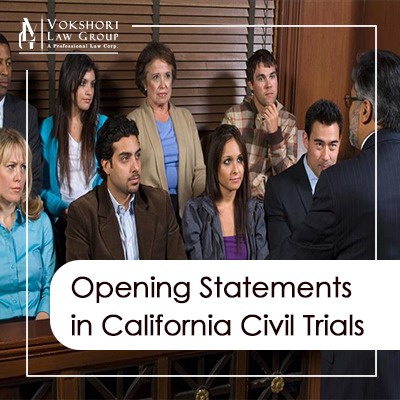
In a California civil trial, an effective opening statement does more than outline a case. It shapes the narrative the jurors will use to interpret everything they hear during the trial.
Its purpose is to organize the case for the fact finder and establish credibility from the outset.
1. Start With a Story Grounded in Real People and Real Events
Jurors connect with people, not legal theories.
Your opening should in plain language answer three questions immediately:
- Who are the parties?
- What happened?
- Why does it matter?
A persuasive opening explains what happened in clear, direct language, sets the factual and emotional context, and grounds the case in the real experiences of the people involved.
Jurors and judges alike process cases as stories. In California civil litigation, where cases often involve contracts, real estate transactions, or business disputes, if the narrative is unclear at the start, the evidence will feel disjointed.
2. Present Your Theory of the Case
Your theory of the case is not a recitation of legal elements. It is your explanation of what truly happened and why. It must be concise, coherent, and repeatable. Jurors will gravitate toward the side that gives them a framework they can easily follow.
It answers questions jurors are already asking:
- Who made a choice?
- Why did they make it?
- Was it fair?
For example, in a failed real estate transaction, the theory is not merely that a contract was breached. The theory might be that one party walked away when market conditions changed, or that a seller tried to renegotiate after receiving a much higher offer.
A strong theory:
- Assigns meaning to the conduct
- Explains motive in a believable way
- Makes the outcome feel inevitable
Once jurors accept your explanation of “why,” every document and witness testimony is filtered through that understanding.
Complex theories lose jurors before evidence ever begins. In a California civil trial, the theory of the case should be simple enough to withstand days or weeks of testimony without losing coherence.
3. Anchor the Case in Clear Themes
Themes are concise principles that can be repeated throughout trial. They often reflect fairness, accountability, reliance, or transparency.
Themes are not slogans. They are organizing ideas that help the fact finder process complex documents and testimony.
If a theme cannot withstand scrutiny against the record, it should not be used.
4. Acknowledge the Challenges, Before the Opposition Does
No case is perfect.
If there is a damaging email, a missed deadline, or an unfavorable document, acknowledge it early and provide context.
Avoiding weaknesses invites the other side to define them. Addressing them builds credibility.
Credibility gained during opening often carries through the remainder of trial.
5. Integrate Visuals and Preview Evidence with Purpose
Jurors follow an opening more effectively when the visuals you choose and the evidence you preview work together with intention. Simple, well-timed visuals paired with a clear orientation to the evidence give jurors a roadmap they can rely on throughout the case.
Use tools that help jurors track what matters:
- Clean, simple graphics introduced at the right moments
- Demonstratives that illuminate key facts, not complicate them
- Clear previews of key witnesses and what they’ll say
- Early orientation to the documents, exhibits, and timelines that will shape the case
In California trial practice, particularly in document-intensive real estate or business litigation matters, structured visuals and evidence can significantly improve comprehension, and jurors will walk into the trial already understanding your story and remembering the important details.
6. Deliver With Authenticity and Control
Write out a draft, however you’re comfortable (outline, paragraph), and review it. Did you cover all the points? Does the story flow in a logical manner or bounce around? Are you comfortable with all the facts?
Delivery matters.
An effective opening is measured, structured, and confident. Overstatement, argument, and theatrics undermine credibility.
The strongest openings reflect preparation and command of the record. They signal that the evidence will unfold in an organized and logical manner.
Positioning Your Case for Success from the Very First Word
A persuasive opening statement in a California civil trial does three essential things:
- It presents a coherent, credible story grounded in real events.
- It offers a clear and persuasive explanation of why the dispute occurred.
- It connects that explanation directly to the governing law and the specific claims the court or jury must decide.
When done correctly, an opening statement provides the fact finder with a structured framework for understanding the evidence that follows. From that moment forward, every document, witness, and argument is filtered through the narrative you established at the outset. A well-crafted opening does not argue, rather it organizes, clarifies, and builds trust.
If you are preparing for trial in a California civil matter, whether involving real estate, contract disputes, or business litigation, early strategic planning of your opening statement is critical. At Vokshori Law Group, our real estate litigation lawyers approach trial preparation with careful attention to narrative development, evidentiary structure, and courtroom credibility. If your case is heading toward trial, contact our office to discuss how a disciplined and strategic approach can position your case for success from the very first word.
Call us at (855) 855-2608 or visit www.VokLaw.com to learn more.